Chrisothemis Perdikea · The Decoder

Chrisothemis Perdikea, The Decoder

I work on how people decide, trust, buy and react, and I turn that knowledge into better strategy, better experiences and stronger businesses.

Look closer

The Decoder

The Decoder is my personal approach to behavior and decision-making.

I decode the small patterns that usually go unnoticed at first glance: why someone trusts a brand, why they hesitate, why they change their mind, why one experience works and another doesn’t.

I’m not only interested in what people do. I’m interested in why they do it, and what we can build better once we understand it.

Let’s play

Let’s play a quick game.

This is you
Step 01

    Do you control your choices?

    About

    Chrisothemis Perdikea

    Business & Behavioral Strategist · Entrepreneur · Co-Founder of Connected

    • Behavioral Strategy
    • Neuromarketing
    • Nonverbal Communication
    • Marketing & Business Strategy

    I study people. I work with businesses. And I question the things we take for granted.

    Portrait of Chrisothemis Perdikea, Business & Behavioral Strategist and Co-Founder of Connected
    Fig. 01 Looking closer

    I’m a Business & Behavioral Strategist, Entrepreneur, Author, Advisor, Trainer and Co-Founder of Connected.

    My work brings together human behavior, marketing, business strategy and technology to understand how people make decisions and what businesses can do with that understanding.

    Hi, I’m Chrisothemis.

    I’ve always been curious about why people do what they do.

    1. Why we trust one person and question another.
    2. Why we choose one brand over a seemingly identical alternative.
    3. Why a small detail can change the way we experience a business, a product or even a conversation.

    That curiosity has shaped much of my professional life.

    I’ve worked across marketing, branding, creative direction and business development, and over time, my interest in human behavior became an increasingly important part of how I approach problems.

    Today, I work with businesses, develop ideas and tools, teach, write and explore the connection between what people think, what they feel and what they actually do.

    I’m also an award-winning illustrator and author, with creative roots in writing, screenwriting, image and storytelling. That side of my journey still deeply shapes the way I think and observe the world. It has taught me to notice details, to look for what hides behind the obvious and to connect elements that at first seem unrelated. It’s a creative lens I bring to this day to the way I study human behavior, analyze situations and approach every problem.

    I don’t believe every problem has a complicated answer. But I do believe it’s worth understanding the problem before deciding what to do about it.

    Chrisothemis Perdikea · The Decoder

    I look at what people do, what they communicate, and what we might be missing.

    • 2012the year I started in marketing
      and business strategy
    • 1,500businesses helped with communication, customer behavior, branding and growth
    • 1continuing fascination:
      human behavior

    I’m a Business & Behavioral Strategist, Nonverbal Communication Specialist, Entrepreneur, Consultant and Trainer.

    My work connects behavioral science, neuromarketing, nonverbal communication and business strategy to understand how people perceive, decide, interact and respond.

    Tap a circle to see what each discipline brings.

    The Decoder

    Connecting observations, research, context and evidence to understand human behavior, and apply what we learn.

    Different disciplines. One question: What’s really happening here?

    What I do

    One starting point: people and the decisions they make.

    My work spans several areas, but they share one starting point: understanding people and the decisions they make.

    1. 01

      Behavioral Strategy & Neuromarketing

      Understanding what influences people’s decisions, perceptions, trust and behavior and applying those insights to business and marketing challenges.

    2. 02

      Nonverbal Communication & Human Behavior

      Exploring facial expressions, body language, nonverbal signals and the role of context in how people communicate and interpret one another.

    3. 03

      Marketing & Business Strategy

      Helping businesses understand their audiences, improve their positioning, rethink customer experiences and identify opportunities for growth.

    4. 04

      Entrepreneurship & Innovation

      Building businesses, developing new concepts and exploring how strategy, creativity and technology can solve practical problems.

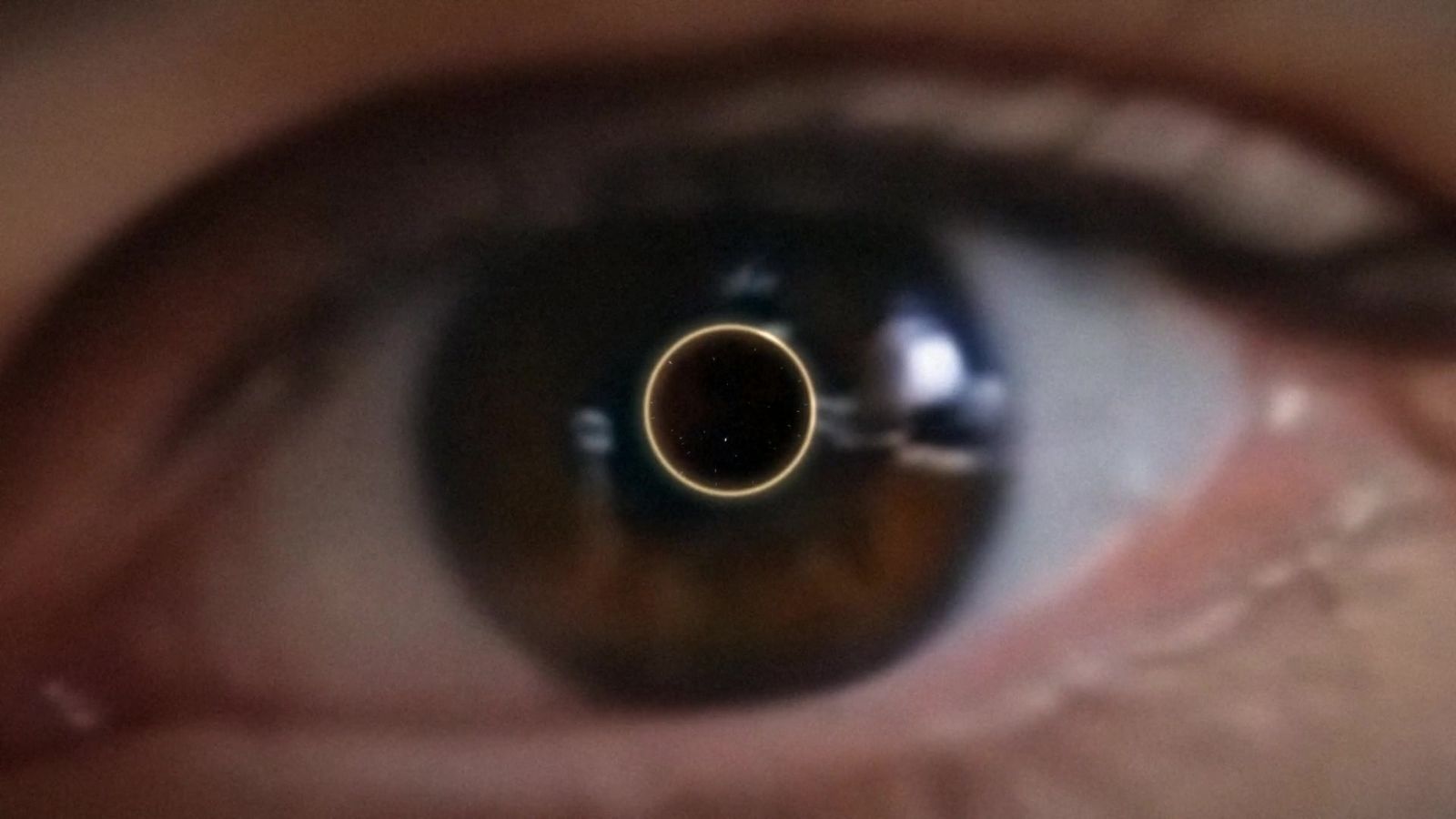
    Close-up of Chrisothemis Perdikea’s eye with a golden focus ring, The Decoder

    My personal signature

    The Decoder

    There’s usually more to the story.

    01 / 04

    Why do customers abandon a purchase at the last moment?

    02 / 04

    Why does a negative review influence us more than dozens of positive ones?

    03 / 04

    Why do some ideas spread while others disappear?

    04 / 04

    And why do people sometimes act in ways that seem completely irrational?

    These are the kinds of questions I like exploring.

    Through The Decoder, I examine everyday decisions, business practices, marketing, cultural trends and human behavior to understand what might be happening beneath the surface.

    I look at research, real examples and alternative explanations, because a compelling story isn’t necessarily the correct explanation.

    Look closer. Think differently.

    The Decoder · Why human behavior matters

    The future of business is human behavior.

    For decades, businesses have measured what people do. The harder question has always been why.

    • A customer clicks but doesn’t buy.Why?
    • Someone chooses a more expensive product.Why?
    • Two people hear the same message and react completely differently.Why?

    Traditional marketing can help us measure the outcome. Behavioral science helps us investigate the decisions behind it. And that changes the questions we ask, the experiences we design and the way businesses grow.

    The science behind the decisions

    People don’t always tell you why they choose. Their behavior can reveal what to investigate.

    Why do we trust one business and hesitate with another? Why does a small change in wording influence a decision? Why do customers leave even when they seem interested?

    I study the signals behind these moments, connecting behavioral research with customer experience, marketing and business strategy. Not to guess what people are thinking. To ask better questions, test possible explanations and help businesses make more informed decisions.

    Two fields that are often confused

    Behavioral Marketing

    Applies insights from behavioral science to understand how attention, context, habits, social influence and the way choices are presented shape decisions.

    In practice We examine why a customer hesitates, what makes a choice difficult and which changes are worth testing.

    Neuromarketing

    Studies how people respond to marketing stimuli using methods from neuroscience and physiology, such as eye-tracking, EEG or measures of electrodermal activity.

    In practice We can examine where visual attention goes or how physiological arousal changes. Not read minds.

    A note on honesty Behavioral analysis without specialized equipment is not a neurophysiological measurement. I draw on neuromarketing and behavioral science research, and I always say which data were actually collected.

    The Decoder · Interactive demo

    What would I investigate first?

    Choose a business problem and explore how observations become questions, tests and measurable decisions.

    01 / Observed signal

    Many customers begin checkout but do not complete it.

    This is an observation, not yet an explanation.

    Illustrative diagnostic exercise. No live customer data or verified results are represented.

    Decode a decision

    Three small details. Three big questions.

    These are documented research findings and public examples I use to explain how I think. They are not Connected client results.

    Before · Illustrative checkoutAfter · Proposed test

    Your order

    Product$48

    ShippingCalculated later$5

    Total$53

    Create an account to continueContinue as guest →

    ? !

    Example 01 · Customer friction

    They wanted to buy. So why did they leave?

    What I would investigate Is the customer leaving because of the price, the uncertainty around the final cost, the need to create an account, or simply because they weren’t ready to buy?

    I would examine the checkout steps, customer feedback and abandonment patterns before testing a clearer total and a more accessible guest checkout.

    Research basis In Baymard Institute’s checkout research, extra costs (40%) and required account creation (18%) are among the most common documented reasons shoppers abandon a purchase. The mockup is illustrative, not a Connected client result.

    Beyond words · Nonverbal communication

    You saw the gesture. But did you understand it?

    Someone crosses their arms during a meeting. Are they defensive? Uncomfortable? Cold? Concentrating? Or simply sitting in a position they find comfortable?

    The gesture is visible. The meaning isn’t necessarily obvious.

    The Decoder experiment · 01

    What do crossed arms really mean?

    You’re in a meeting. The person across from you folds their arms while listening. What’s your first interpretation?

    Educational scenario. The illustration is not evidence of anyone’s actual emotional state.

    Nonverbal communication is more than body language. It involves facial expressions, gestures, posture, vocal cues, interpersonal distance, timing and the context in which communication happens.

    I examine how these signals contribute to human interaction, what research can tell us about them, and why interpreting a single gesture without context can lead us to the wrong conclusion.

    The skill isn’t seeing more meaning in everything. It’s knowing what the evidence allows you to conclude.

    09:42

    Manager · Message received

    We need to talk.

    The Decoder experiment · 02

    The same words. A different story.

    You receive this message from your manager. What comes to mind first?

    Illustrative exercise, not a psychological assessment or a measured experiment.

    Why it matters more every year

    Technology is changing how we communicate. Human behavior still matters.

    We work through screens. We meet through cameras. We interact with AI systems, automated services and people we may never meet in person. But communication has never been just about words.

    Tone, timing, facial expressions, gestures, context and expectations can all contribute to how a message is understood. Not to claim we know what someone is thinking, but to become better observers, more thoughtful communicators and more aware of how easily we can misunderstand one another.

    Eye tracking & heatmaps

    Just because something is on your website doesn’t mean anyone sees it.

    Imagine spending thousands on a website, only to discover that visitors barely notice the information you consider most important.

    • Your offer.
    • Your call-to-action.
    • The reason someone should choose you.

    Eye tracking helps us study where people look, in what order and for how long.

    Heatmaps turn behavioral data into visual patterns, making it easier to identify areas that attract attention, elements that are overlooked and parts of an experience that may deserve closer investigation.

    But there’s an important distinction: looking at something doesn’t necessarily mean understanding it, liking it or remembering it.

    That’s why I don’t treat a colorful heatmap as an answer. I treat it as another piece of evidence. The interesting question isn’t simply where people looked. It’s what that observation can help us investigate next.

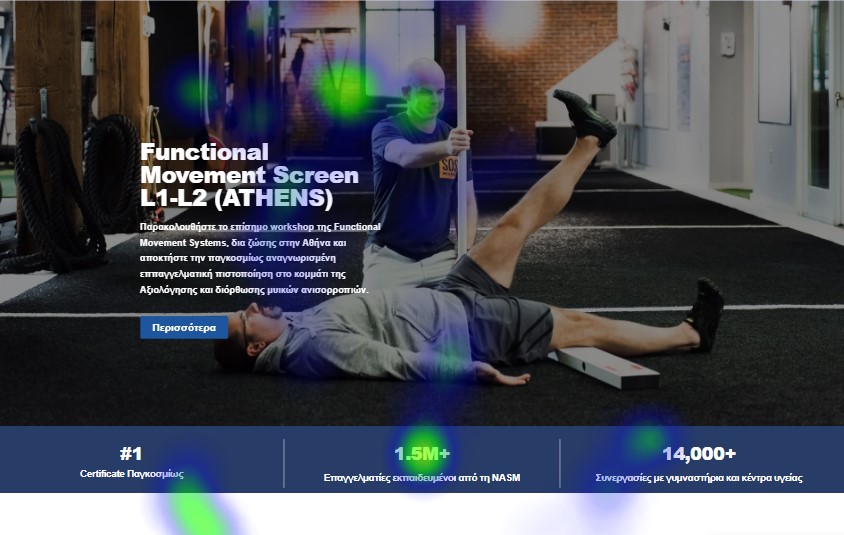
    Homepage of a website with an eye-tracking heatmap: attention gathers on the people in the photo, while the button gets very little 1Most attention: the people in the photo 2Then the headline 3The button: barely noticed

    Example · Illustrative scenario

    Most people looked at the person. Few noticed the button.

    Let’s assume that in a real eye-tracking study, most participants looked at the person in the photo, but far fewer noticed the “More” button.

    A typical marketer might say

    “Let’s make the button bigger.”

    As a behavioral strategist

    I first ask why it doesn’t draw attention, and whether that actually affects the visitor’s decision.

    It could come down to

    • the visual hierarchy
    • the contrast
    • the button’s position
    • an unclear offer
    • or the visitor saw it but wasn’t interested in the service

    You don’t make decisions just by looking at colors on an image.

    Interactive · Choose what you want to learn

    Not all heatmaps measure the same thing.

    Where did people look?

    Shows aggregated visual attention from recorded eye movements or fixations, depending on the study and visualization.

    Useful forInvestigating whether participants noticed a price, a headline, a warning or a call-to-action.

    The Decoder’s questionWhat does this data show, and what does it still leave unanswered?

    This distinction matters, because many businesses call all of these tools “eye tracking”, while in reality they collect very different data. Illustrative visualizations, not real study data.

    How data becomes insight

    1. Signal

      Participants mostly look at the photo.

    2. Hypothesis

      The photo may be competing with the call-to-action for attention.

    3. Experiment

      Test a different composition and visual hierarchy.

    4. Decision

      Judge it by attention, understanding and what users actually do.

    Seeing is not the same as understanding.

    A heatmap might show that people notice a photograph but overlook the most important message on a page. Eye tracking can help us investigate visual attention. Click and scroll heatmaps can reveal different interaction patterns.

    But the colors alone don’t explain why people behave the way they do. That’s where my work becomes interesting. I connect behavioral observations with context, research and business objectives to explore what might be happening and what we should test next.

    Because the goal isn’t to create a beautiful heatmap. It’s to make a better decision with the evidence we have.

    My approach

    From what people do to what businesses can learn.

    1. 01Observe

      What are people actually doing, saying or avoiding?

    2. 02Decode

      Which signals, patterns and possible explanations deserve investigation?

    3. 03Test

      What evidence or experiment can distinguish the explanations?

    4. 04Apply

      What should change, and how will we know whether it worked?

    Bring The Decoder to Your Audience

    Interactive history · Five chapters

    We thought we understood why people choose. Then we started asking different questions.

    The story doesn’t begin with an agency inventing a new term. It begins when researchers started questioning a powerful assumption: that people always make decisions by rationally weighing all the information available.

    1870s to 1900s

    Before the words

    Researchers such as Charles Darwin and Wilhelm Wundt helped establish scientific approaches to expression, emotion and human psychology. The study of nonverbal behavior would develop through many disciplines.

    The question that matteredWhat can we actually observe about human expression?

    1950s · Bounded rationality

    Herbert Simon

    Simon developed the idea of bounded rationality: people decide with limited time, information and mental resources. They can’t always search for and evaluate the absolute best option.

    The question that matteredWhat if people choose what is good enough, not what is best?

    1970s · Judgment & decision-making

    Daniel Kahneman & Amos Tversky

    They studied systematically how people use mental shortcuts and how the way options are presented can influence judgment. In 1979 they published Prospect Theory, which became fundamental to the study of decisions under risk.

    The question that matteredWhy does the same choice feel different when it’s framed differently?

    Early 2000s · Neuromarketing

    When the brand changed the experience

    The term neuromarketing became widely known in the early 2000s and is often linked to Professor Ale Smidts, who used it in 2002. In a well-known 2004 study, McClure and colleagues used fMRI, among other methods, to look at preferences for Coca-Cola and Pepsi. Knowing the brand affected stated preferences and was associated with different patterns of brain activity.

    The question that matteredAre we tasting the product, or the brand?

    2008 · Behavioral economics in practice

    Richard Thaler & Cass Sunstein

    The book Nudge made widely known the idea that the way a choice is organized can influence behavior, without necessarily removing alternatives. Governments and businesses began testing these ideas in the real world.

    The question that matteredIf the design of a choice shapes behavior, who is designing it, and how?

    1 / 5

    This history is condensed. It doesn’t suggest one straight line from nonverbal communication to neuromarketing. These are different fields with points of contact. Behavioral marketing grew where these ideas met older traditions of consumer psychology, market research and advertising. It has no single birthday and no single inventor.

    The real change was this: instead of only asking what consumers say they want, we also look at what they do, the context in which they decide, and the other explanations for their behavior.

    The Decoder · Experience 03

    Same drink. Different expectations?

    Imagine the two drinks have exactly the same contents, but one is presented with a familiar brand. Could the brand change your experience?

    Thought experiment inspired by consumer neuroscience research, not an actual taste test.

    What neuromarketing really adds

    Neuromarketing doesn’t replace traditional market research. It adds another perspective.

    Interviews and surveys help us understand what people report. Methods such as eye-tracking, EEG and physiological measurements can add information about attention and responses to stimuli.

    • Attention doesn’t automatically mean interest.
    • Physiological arousal doesn’t necessarily mean excitement.
    • Brain activity doesn’t reveal a customer’s thoughts like subtitles on a screen.

    The real opportunity lies in combining different kinds of evidence to understand consumer experiences more accurately.

    And where do I come in?

    Where my story connects.

    Since 2012, I’ve worked in marketing and business strategy, helping 1,500 businesses navigate challenges, develop their brands and explore opportunities for growth.

    But one question kept coming back: what makes people respond the way they do?

    That curiosity led me deeper into behavioral strategy, neuromarketing and nonverbal communication. I became interested not only in what customers choose, but also in how people communicate, interpret information, develop trust and respond to different situations.

    Today, these perspectives influence how I approach business problems, develop ideas, teach and create content. My goal is to make behavioral knowledge more accessible and practically useful, particularly for businesses and professionals who have never encountered these disciplines before.

    The next business advantage

    When everyone has access to similar technology, understanding people becomes even more valuable.

    AI can help businesses create content, analyze data, build websites and automate processes. But more data doesn’t automatically mean better understanding.

    A business may knowWithout knowing
    exactly where customers leave a websitewhy they hesitate
    how to generate hundreds of messageswhich ones people trust
    how to automate a customer experiencethe moments that make people uncomfortable

    That’s where behavioral thinking matters. Not because it replaces technology. Because it helps us ask what technology should actually improve.

    Five shifts creating this need

    01AI makes production easier. Understanding remains difficult.

    More and more businesses can produce content and automate processes. That raises the importance of understanding the audience, standing out, and evaluating what actually works.

    02Businesses can measure clicks. They still need to understand decisions.

    Analytics reveal patterns of behavior. They don’t always reveal the causes. Behavioral research helps form possible explanations and test them.

    03Trust becomes a design challenge.

    Businesses need to look at how trust is built through the information, experience, consistency and real proof they offer.

    04Human interaction still shapes business outcomes.

    Meetings, leadership, negotiation and customer service all involve verbal and nonverbal elements. Communication training can help people observe and respond more carefully.

    05Competitive advantage increasingly depends on better experiments.

    Knowing a theory doesn’t mean knowing how it applies to your own customers. That takes testing, measurement and adjustment.

    These are strategic trends and reasonable business implications, not a claim that every company will need neuromarketing or specialized equipment.

    Earth at night with golden lines connecting points of human activity, a visual of how everything is connected

    Business

    Building things with Connected

    I’m a Co-Founder of Connected, a Behavioral Marketing & Technology Company.

    At Connected, we work with businesses on strategy, branding, websites, e-commerce, digital marketing, customer experience and technology.

    We bring different disciplines together because business problems rarely fit neatly into one department.

    Our work ranges from improving how a company communicates and reaches its customers to developing digital platforms, systems and new business solutions.

    Some projects begin with a website. Others begin with a question about why customers aren’t converting, why a business isn’t growing or what could be done differently.

    Success comes when everything is connected.

    Discover Connected

    Labs & Ideas

    Ideas I’m building and exploring

    Part of my work involves developing new approaches, tools and projects around recurring business problems.

    Some are designed to help businesses understand their customers. Others focus on improving experiences, making better decisions or finding new ways to grow.

    Through Connected and its Labs, I explore how behavioral thinking, creativity and technology can work together.

    Lab 01

    Behavioral Growth Lab

    Exploring how behavioral insights can improve customer journeys, communication and business performance.

    Lab 02

    Built from Zero Lab

    Building an idea and a business from zero. We build practically everything, from strategy and brand all the way to the physical space, together with our partners.

    Lab 03

    Connected Persona

    Our system for personal and business branding.

    Tools

    Tools & Digital Products

    I take part in creating tools and solutions such as Signalsophy, SmartToki and other projects developed within the Connected ecosystem.

    • Signalsophy
    • SmartToki

    Educator

    Learning should change the way you see things.

    Teaching is another part of my work.

    I share knowledge and practical perspectives on marketing, branding, consumer behavior, communication and business strategy.

    What interests me most is helping people connect what they learn with what happens outside the classroom.

    I bring real business examples, research and practical problems into the conversation.

    • ?How do customers really make decisions?
    • ?Why does a message work in one situation and fail in another?
    • ?What should we question before following a popular marketing practice?

    Because understanding a concept is useful. Knowing when and how to apply it is even better.

    Show & channel

    Δεν ΕίναιΤυχαίο

    What looks random often deserves a closer look.

    Δεν Είναι Τυχαίο is my content and media project about the stories, decisions and patterns behind things we encounter every day.

    From brands and businesses to technology, social trends and familiar situations, I explore what happened, what might explain it and what we can learn from it.

    Sometimes the answer is in the research. Sometimes it’s in a detail everyone overlooked. And sometimes the most interesting discovery is that the popular explanation doesn’t hold up.

    It’s a place for curiosity, questions and conversations that go beyond the obvious.

    Follow along

    Follow my curiosity.

    Consultant · Trainer · Speaker

    Three ways to put this knowledge to work.

    Consulting

    When a business needs a clearer understanding of a problem.

    I work with businesses to examine customer behavior, communication, decision-making and experience-related challenges. Through observation, research and structured analysis, I help identify possible causes, evaluate opportunities and determine which changes are worth testing.

    Typical areas Customer experience, behavioral friction, brand perception, communication and growth strategy.

    Discuss a project

    Corporate Training & Workshops

    When teams need to understand people more effectively.

    I design educational sessions around behavioral insights, nonverbal communication, marketing and human interaction. Rather than relying only on presentations, I use examples, scenarios and practical exercises to help participants examine assumptions and apply what they learn.

    For Leadership teams, marketing and sales professionals, customer-facing teams and organizations.

    Plan a training

    Speaking & Media

    When an audience needs a different perspective.

    I explore the behavioral side of everyday decisions, business, communication and technology through talks, interviews and media appearances. My goal is to make complex ideas accessible, thought-provoking and relevant to the people listening.

    For Conferences, business events, educational organizations, podcasts and media productions.

    Invite me to speak

    What can change after a session?

    • Participants can tell observations apart from assumptions.
    • They can spot possible barriers in how people make decisions.
    • They can read nonverbal signals without jumping to conclusions.

    Speaking & Training

    Good questions can change the way we think. Good conversations can change what we do next.

    I speak and teach about human behavior, behavioral strategy, marketing, neuromarketing and nonverbal communication.

    Through talks, workshops and training sessions, I explore how people make decisions, how communication shapes perception and how businesses can use behavioral insights in practical ways.

    My sessions connect research with real-world examples, questions and situations people recognize from their everyday and professional lives.

    I work with businesses, teams, educational organizations and event organizers, adapting the content to the audience and the questions that matter to them.

    Selected speaking & training topics

    1. 01

      Why People Choose

      Consumer behavior, perception and decision-making.

    2. 02

      The Language Beyond Words

      Nonverbal communication, facial expressions and context.

    3. 03

      The Behavioral Side of Marketing

      How attention, trust and friction affect customer decisions.

    4. 04

      The Psychology of Influence

      How communication, context and social influence shape choices.

    5. 05

      Rethinking Customer Experience

      Understanding the moments that shape customer behavior.

    6. 06

      Human Behavior in the AI Era

      Trust, technology and the changing relationship between people and AI.

    Interested in inviting me to speak or organizing a training session?

    The Decoder · A way of looking closer

    I don’t just look at what people say. Or what they do. I look at how the pieces connect.

    A decision A hesitation A facial expression A customer complaint A sudden change in behavior

    Each may be a clue. None necessarily tells the whole story.

    I bring together behavioral insights, nonverbal communication, marketing experience and business thinking to explore what these moments can tell us, and what they can’t.

    I use that perspective in consulting, training, entrepreneurship and the stories I share through The Decoder. Because understanding people starts with looking beyond the obvious.

    Why I do what I do

    The future of business isn’t just about knowing more. It’s about understanding better.

    Since 2012, I’ve worked in marketing and business, helping 1,500 businesses navigate challenges and opportunities. Along the way, I became increasingly interested in the human side of every business decision. Today, I connect behavioral strategy, neuromarketing research, nonverbal communication and marketing experience across different parts of my work.

    • As a consultantI help businesses investigate problems and identify opportunities.
    • As a trainer & educatorI make behavioral knowledge understandable and applicable.
    • As an entrepreneur & Co-Founder of ConnectedI work on turning ideas and insights into business solutions.
    • Through The DecoderI explore the stories, patterns and questions behind everyday decisions, making complex subjects accessible to a wider audience.
    I don’t believe we need more confident guesses about people. We need better ways to understand them.

    Work with me

    Have something in mind?

    I work across business strategy, behavioral insights, education, content and new ideas.

    If you’re exploring a business challenge, looking for a fresh perspective, planning a talk or educational session, or interested in a creative collaboration, I’d be happy to hear from you.

    For business projects involving marketing, branding, digital experiences or technology, you can also connect with my team at Connected.

    Let’s talk.